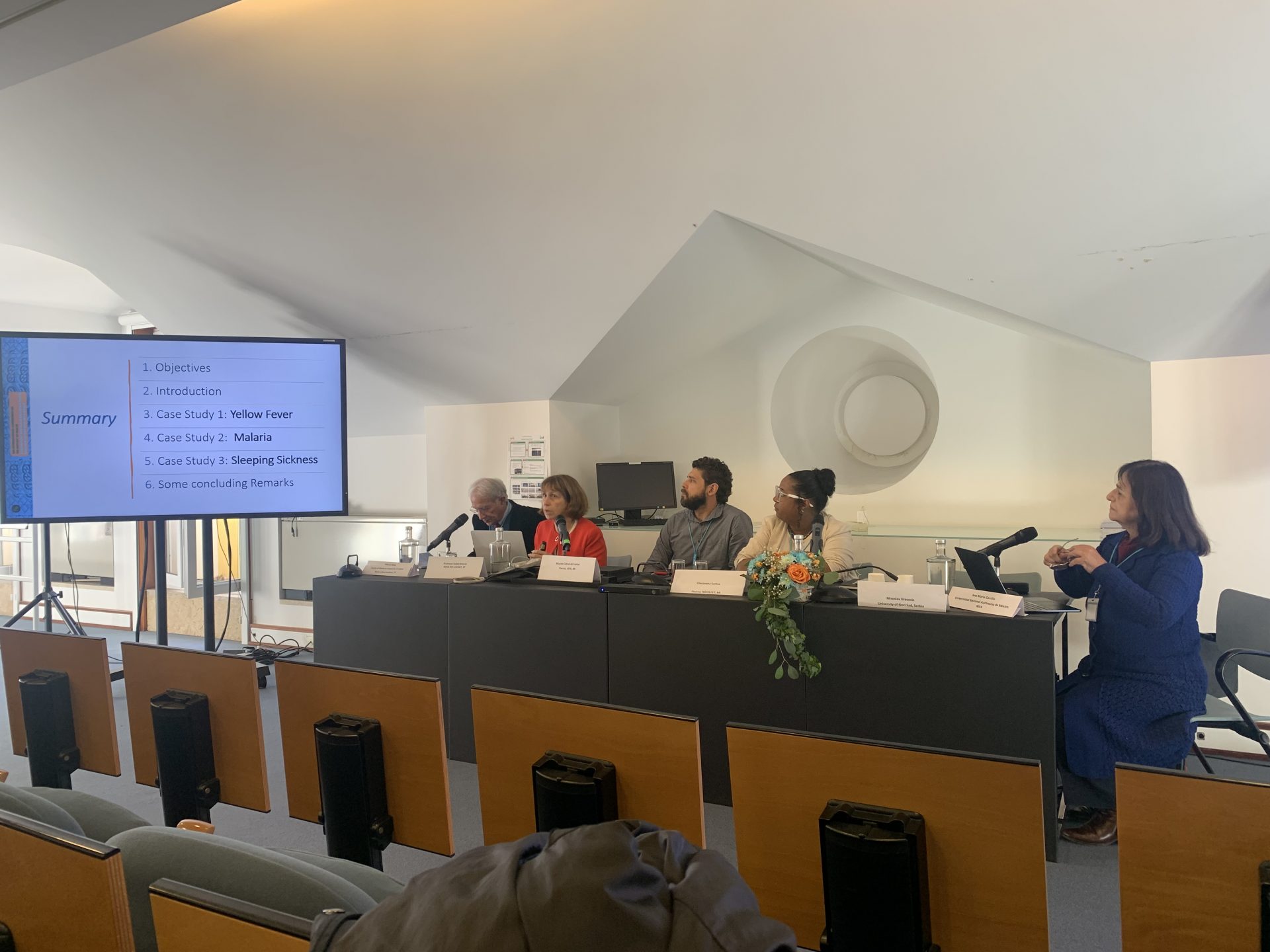
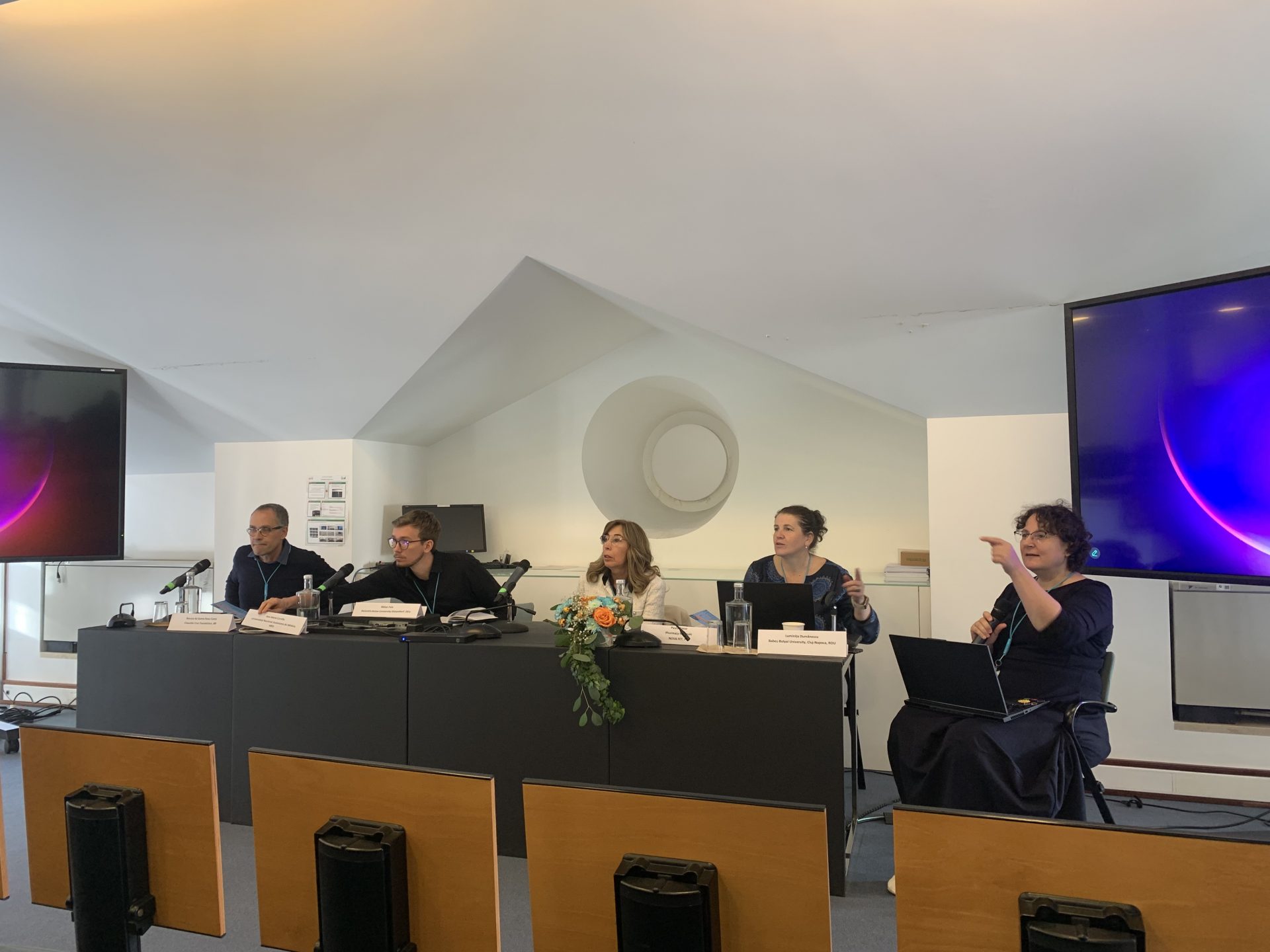
In early December 2024 a number of our Action members were involved in the excellent 2nd International Conference on the History of Health: Epidemiology and Health Infrastructure in European History (19th–21st Century) organised jointly by the Interuniversity Centre for the History of Science and Technology (CIUHCT) in Lisbon, NOVA FCT, FCUL, CHSTM, the Faculty of Arts, University of Ljubljana, Lab2PT, IN2PAST, the Institute of Social Sciences of the University of Minho, the Museum of Health and Pharmacy in Lisbon and our COST Action – EuroHealthHist.
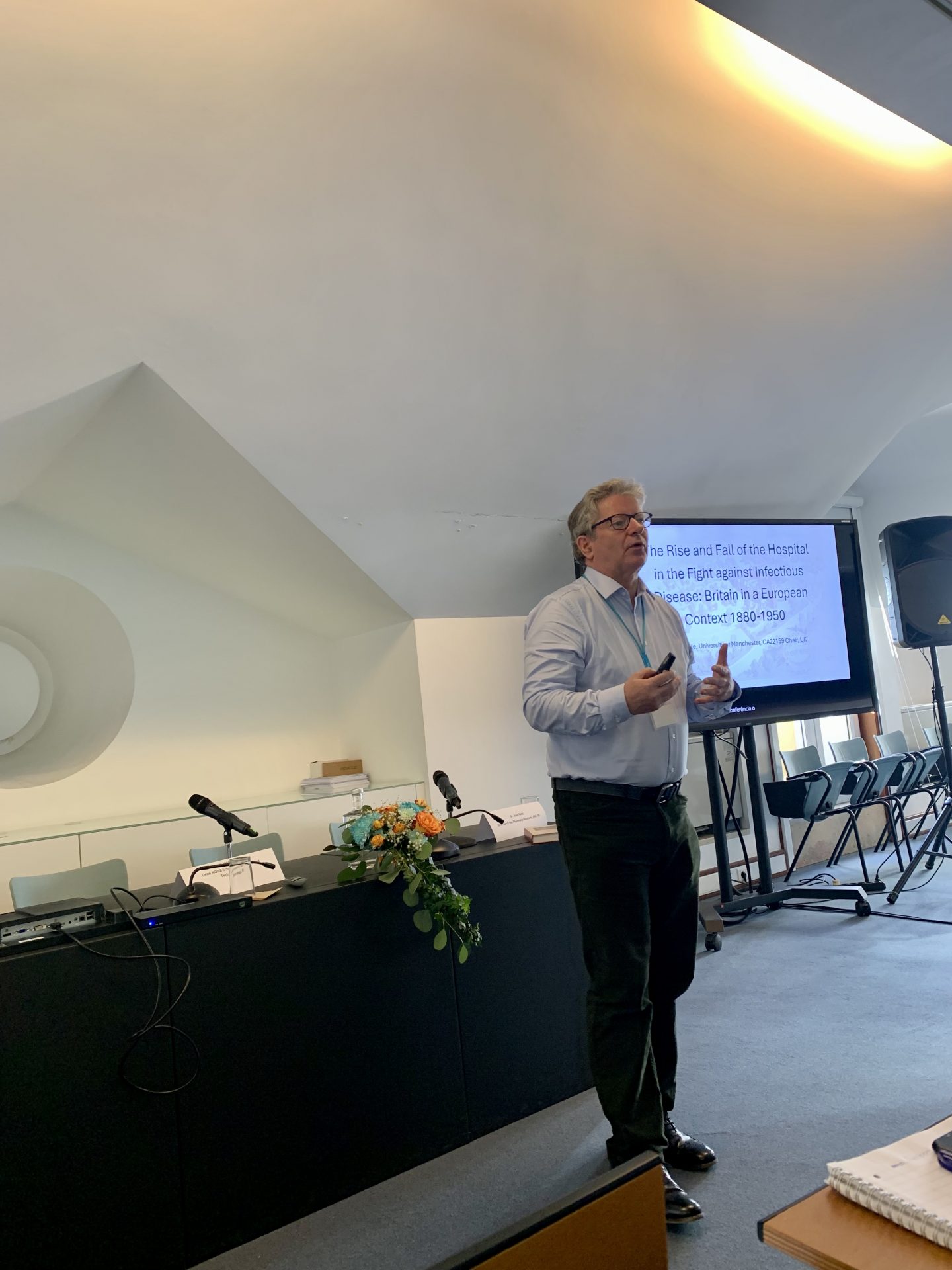
Organised by Professors Isabel Amaral and Alexandra Estevez, the aim of the conference was an in-depth, comparative study of health infrastructures and epidemiological practices in Europe, as well as in South and Central America, since the nineteenth century. Over three days, more than 30 speakers from Europe, Brazil, and Mexico presented their own research on the development of public health infrastructures, responses to epidemics and health crises, the role of medical and scientific institutions in shaping health policy, and the impact of social, political and economic factors on public health systems. The keynote speaker was Professor of Health History Barry Doyle from the University of Manchester, Chair of our Action.
The conference sections comprehensively examined critical medical challenges, focussing on the treatment of infectious diseases such as cholera, smallpox, tuberculosis, and tropical diseases such as malaria, yellow fever, sleeping sickness, and AIDS. Discussions also centred on co-infections, co-epidemics, the development of health systems, and the development of hospitals and sanatoria for the treatment of these diseases. The conference successfully brought together a diverse group of scholars who contributed to a deeper understanding of historical epidemiological challenges and the development of health infrastructure. The combination of established academics and emerging researchers, as well as the interdisciplinary approach encompassing both the humanities and medicine, fostered rich discussions and new perspectives. The choice of the Museum of Health and Pharmacy in Lisbon as 359 the venue proved particularly appropriate, as it offered participants tangible links to the history of medicine through its extensive collection.
We are grateful to Mojca Ramšak for this report, first published in Acta Med Hist Adriat 2024; 22(2)